
Boaters’ Preferred Service 4.7 178 Google reviews
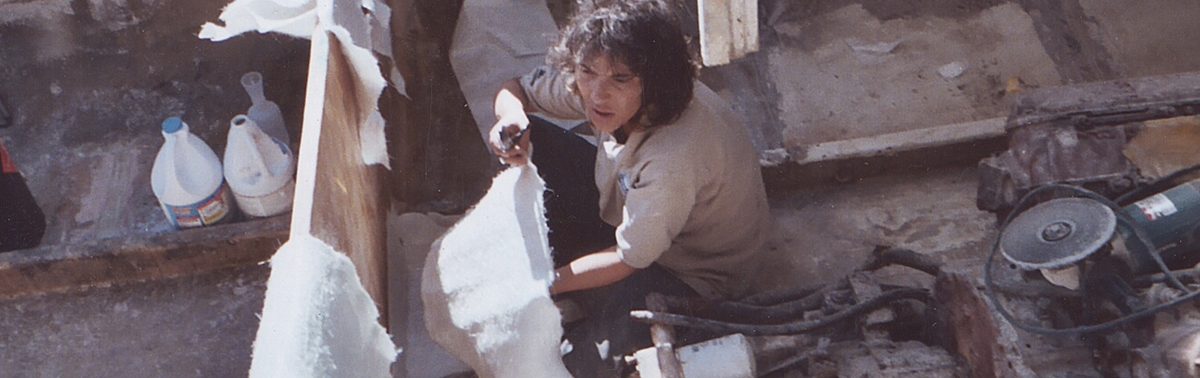
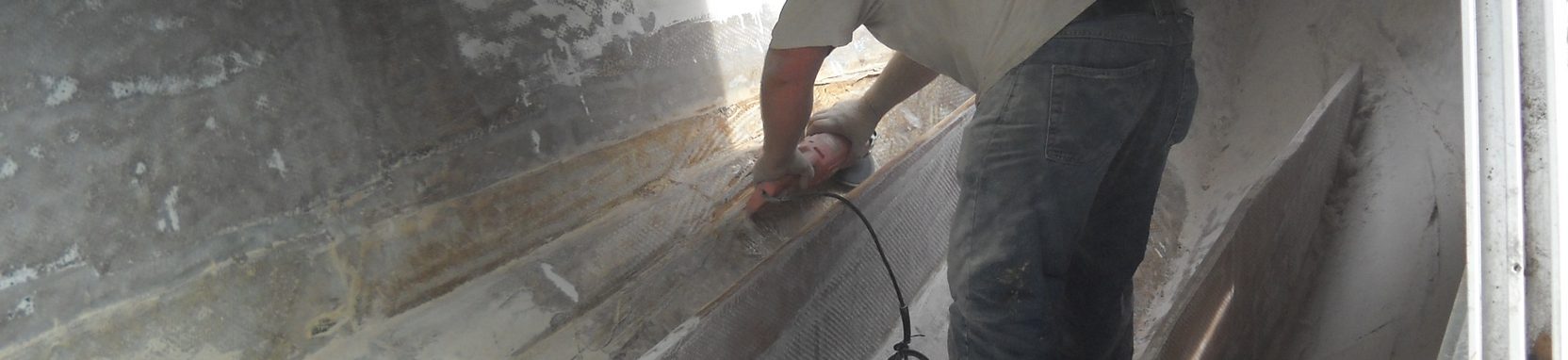
Captain Levi’s technician grinding inside a stripped hull between the bulkheads
Structural Fiberglass Repair

Fiberglass Bulkhead Repair
That Restores Your
Boat’s Strength.

Professional fiberglass bulkhead repair and replacement for boats with cracked, damaged, delaminated, or water-compromised structural members.

Largo, FL • Serving Tampa Bay & Pinellas County

Stripped bilge with rotted bulkhead and stringer wood exposed
The Importance of Bulkheads

Your Bulkheads Are Part
of the Boat’s Structure.

Bulkheads help divide and reinforce the hull, support loads, and maintain your boat’s shape. Over time, they can be affected by water intrusion, rot, delamination, impact, stress cracks, or failed bonding. Our team repairs and replaces damaged bulkheads with high-quality materials to restore strength and reliability.

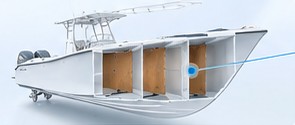
Cutaway of a centre console hull showing the bulkheads that divide and brace it
Bulkheads add strength, separate compartments and help maintain your boat’s structure.
Our Services

Bulkhead Repairs We Handle.

From small repairs to full replacements, we provide professional fiberglass bulkhead repair for all types of boats throughout Tampa Bay.

View All Services
Stripped bilge with rotted bulkhead wood exposed

Damaged Bulkheads

Repair cracks, impact damage and soft spots in fiberglass bulkheads.

A bulkhead that’s cracked, dented by a heavy hit or soft when you push on it isn’t carrying its share of the load, so the hull around it has to work harder. We sound the panel and its tabbing to find where the damage really ends, grind back to solid glass, and rebuild with new core and laminate where needed.

Get a Free Quote
Bulkhead tabbed into the hull with new fiberglass

Rot & Water Intrusion

Remove damaged material and rebuild with marine-grade fiberglass.

Bulkheads on many older boats are plywood, and once bilge water or a leaking fitting reaches the wood, it can rot behind a skin that still looks fine. Dark staining or crumbling wood along the base is a common clue. We cut out everything wet or rotted back to solid structure before the new core and laminate go in.

Get a Free Quote
Crew member fitting a plywood bulkhead template

Delaminated Fiberglass

Rebuild areas where the fiberglass has separated or lost its bond.

Years of flexing, engine vibration and bilge moisture can let the fiberglass skin pull away from the plywood underneath, leaving a lifted edge or a panel that sounds hollow when tapped. We remove the loose laminate back to a sound bond, check the core behind it, and lay up new fiberglass so skin and core work together again.

Get a Free Quote
Crew glassing new bulkheads into a hull

Cracked or Failed Bonding

Address stress cracks and failed bonding between the bulkhead and hull or deck.

A bulkhead is held to the hull and deck by tabbing, strips of fiberglass laminated across the joint. When that tabbing cracks or lets go, you may see a gap along the seam or hear creaking underway. We grind off the failed tabbing, prep both surfaces and re-tab the joint so the bulkhead and hull act as one structure again.

Get a Free Quote
New plywood bulkhead glassed into a bilge compartment

Bulkhead Replacement

Complete or partial bulkhead replacement using proper materials and techniques.

When a bulkhead is too rotted or broken to save, patching it only buys time. We cut the old panel out, fit a new one to the opening, skin it in fiberglass, bed it with a radiused fillet and tab it into the hull. If only part has failed, we replace just that section and tie it into sound material.

Get a Free Quote
Technician laminating new core inside a hull

Reinforcement & Re-Lamination

Add strength and additional laminates when needed for long-term durability.

Some bulkheads are sound but were lightly glassed at the factory, or they sit where the hull works hardest, like the engine room or under a console. We grind back the existing tabbing and add wider, tapered layers of fiberglass so the load spreads over a bigger area and the joint is less likely to crack again.

Get a Free Quote
Captain Dave’s Rule

An Offshore Boat Should Have
at Least Four Watertight Bulkheads.

Bulkheads are the transverse structure of the hull: they add athwartships strength and cut down flexing. On a boat that goes offshore they do a second job, dividing the hull into compartments so that one breach does not flood the whole boat. In Captain Dave’s view that takes at least four, and each one guards against a different failure. The bottom line is survivability.

What wears a bulkhead out
  • Flexing as the hull works through a seaway
  • Vibration from the main engines and generator
  • Moisture standing in the bilge
  • Heat from the engine room
  1. Collision bulkhead

    Forward, in the bow

    The compartment ahead of it is usually the anchor-rode locker. In a head-on collision, if the collision bulkhead holds, you are still afloat.

  2. Forward engine-room bulkhead

    Ahead of the main engines

    Together with the aft bulkhead it closes off the engine room, which holds the stuffing boxes and the through-hull fittings below the waterline. If one of them leaks, or the hull is breached there, the water stays in the engine room.

  3. Aft engine-room bulkhead

    Behind the main engines

    Completes the engine compartment and doubles as a sound, heat and fire barrier between the machinery and the rest of the boat.

  4. Lazarette bulkhead

    Aft, around the rudders

    Closes off the lazarette where the rudder posts come through the hull. Dropping a rudder offshore is a bad day even for a seasoned skipper; the bulkhead keeps it from becoming a sinking.

Crew glassing new bulkheads into a workboat hull
Our Process

Built Right. Step by Step.

  1. 1

    Inspect & Diagnose

    Locate damaged laminate, core, bonding and surrounding structure.

  2. 2

    Remove Failed Material

    Expose sound substrate and remove compromised material.

  3. 3

    Rebuild & Reinforce

    Install appropriate core and fiberglass laminate with marine-grade resin.

  4. 4

    Fair, Finish & Inspect

    Restore shape, finish and surrounding surfaces for a clean, lasting repair.

Construction & Tabbing

How Bulkheads Are Built
and Tabbed Into the Hull.

Until the late 1990s most production builders made bulkheads from marine plywood and bonded them to the hull with polyester resin and fiberglass: 1.5 oz chopped-strand mat and 24 oz woven roving, cut into strips eight to twelve inches wide. The strips are wetted out and laminated across the joint, part on the hull and part on the plywood, so the bulkhead and the hull become one structure. Builders call this taping-in, or tabbing.

Done correctly, a tabbed joint is strong. But over years of flexing, vibration and bilge moisture it is not uncommon to find the fiberglass delaminating away from the plywood, or the plywood itself degrading behind a skin that still looks fine. Neither shows from across the bilge; a close inspection tells the tale.

  • Marine plywoodThe usual core before the late 1990s
  • 1.5 oz mat + 24 oz woven rovingThe factory tabbing laminate
  • 8–12″ stripsLaminated onto both the hull and the bulkhead
  • Polyester resinThe original production bonding resin
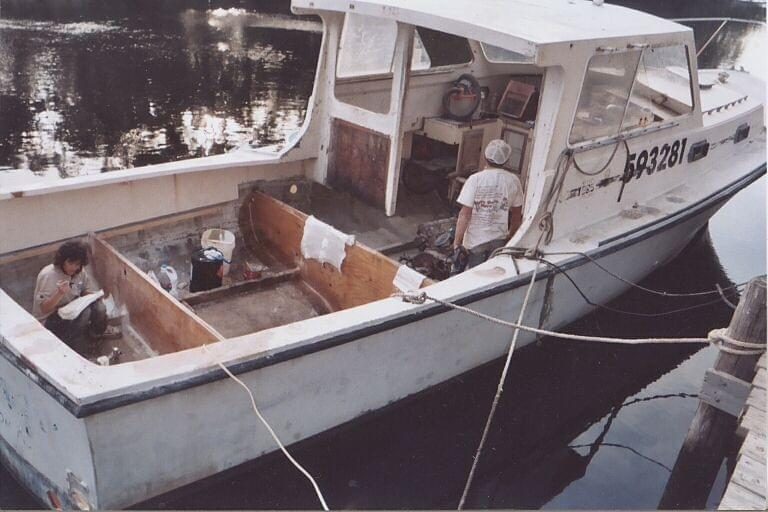
The 1977 35-foot Bruno & Stillman sportfisherman at the dock with its cockpit opened up and new plywood bulkheads fitted in the hull, a crew member trimming one to size
Case Study 1977 35′ Bruno & Stillman sportfisherman

She came to Captain Levi’s in 2003 for bulkhead replacement. Twenty-five years of offshore work had broken two of her bulkheads loose; the marine plywood had lost its integrity. Each replacement was built a full 2″ thick from two sheets of 3/4″ marine plywood laminated together, skinned on both faces with 1.5 oz mat and 1708 biaxial fabric, then bedded in a polyester bonding compound with a radiused fillet and tabbed into the solid-fiberglass hull with 12″, 14″ and 16″ strips of 1708 for a tapered laminate.

Common Signs

Your Boat’s Bulkhead May Need Repair.

If you notice any of these signs, it’s a good idea to have your bulkheads inspected before the damage gets worse.

Not Sure What You’re Looking At? Send us photos and we’ll take a look.
Send Us Photos
  • Soft or Flexing AreasMovement when walking or pushing on the area.
  • Cracking or Stress MarksVisible cracks in fiberglass or surrounding areas.
  • Visible SeparationGaps between the bulkhead and hull or deck.
  • Water Intrusion or StainingSigns of past or present water leaks.
  • Unusual Movement or NoiseCreaking, flexing or loose feeling in the structure.
  • Damaged Surrounding FiberglassHoles, delamination or previous failed repairs.
Before & After

From Damaged Structure to Finished Repair.

We address the damaged structure — not just the surface.

Before: a bulkhead bay with rotted, stained fiberglass. After: the same bay rebuilt with clean white fiberglass.
Before: bulkheads cut back to rotted wood. After: new glassed-in bulkheads with a smooth finish.
Before: a damaged bulkhead compartment with exposed core. After: the compartment rebuilt and finished.
Why Boaters Choose Captain Levi’s

Experience You Can Count On.

With over 50 years of fiberglass repair experience, Captain Levi’s has worked on fiberglass hulls, decks, transoms, stringers and bulkheads. Our team handles both shop and mobile fiberglass boat repair from our Largo, Florida location, serving Tampa Bay and the surrounding Pinellas County area.

  • 50+ Years Experience Long-standing fiberglass repair experience.
  • Family Owned & Operated Real people. Real care.
  • Shop & Boatyard Repairs Repairs at our Largo, FL location.
  • Mobile Service Available We come to you throughout Tampa Bay and Pinellas County.
Serving the Tampa Bay Area

Fiberglass Bulkhead Repair
in Tampa Bay

Largo, Clearwater, St. Petersburg, Tampa, Dunedin, Seminole, Treasure Island, Indian Rocks Beach, Madeira Beach and surrounding Pinellas County.

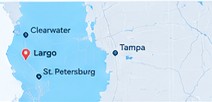
Map of Tampa Bay marking Largo, Clearwater, St. Petersburg and Tampa

Need Fiberglass Bulkhead Repair?

Send us a few photos of the damage and tell us what you’re seeing. We’ll help determine the next step.

CONTACT US

We’re Here to Help

Have a cracked, rotted or loose bulkhead, need a quote, or ready to schedule? Fill out the form or give us a call — we’ll get back to you as soon as possible. Your boat deserves the best, and we’re here to make it happen.

  • 50+ Years ExperienceTrusted. Proven. Local.
  • Mobile ServiceWe come to you.
  • Family OwnedReal people. Real care.
  • Tampa BayLargo, FL & surrounding areas.

Request a Free Quote

Tell us about your boat and the damage. We’ll get back to you quickly.

    We use your details only to respond to your request. See our Privacy Policy.