

Osmotic blisters spread across a fiberglass hull bottom

Hull Blister & Osmosis RepairTampa Bay, Florida

Hull Blister & Osmosis Repair Done Properly.

Blisters are a sign of water working into the laminate. We open, dry and repair them, then seal the bottom so they don’t come back.

  • Serving Tampa BayLargo • Pinellas County
  • 50+ YearsExperience
  • Mobile & Shop ServiceWe Come to You
  • Trusted by BoatersAcross Florida
Understanding Hull Blisters

Blisters Start Small — What Matters Is How Deep They Go.

Osmotic blisters form when water passes through the gelcoat and reacts with the laminate, building pressure that lifts pockets of gelcoat or glass. A few shallow gelcoat blisters are a cosmetic issue; blisters in the laminate itself weaken the hull. We test and open a sample to find out which you have.

Blisters across a fiberglass hull bottom
  • Gelcoat BlistersShallow pockets under the finish.
  • Osmotic FluidAcidic liquid under pressure.
  • Laminate BlistersDeeper voids in the glass.
  • Moisture in LaminateWater absorbed below the gelcoat.

Blister & Osmosis Repairs

Blisters across a hull bottom

Gelcoat Blisters

Shallow blisters opened, cleaned, filled and faired.

Gelcoat blisters are small, scattered bumps that sit only in the finish layer while the laminate behind them stays dry and solid, often on older or poorly cured gelcoat. We open a sample first to confirm they haven’t reached the glass, then grind each one open, let it dry, fill and fair it, and barrier coat the bottom.

Get a Free Quote
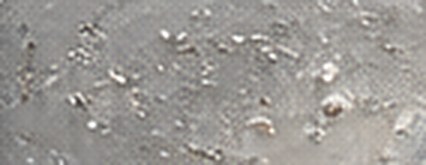
Pitted, blistered hull bottom

Osmotic Blistering

Widespread blistering treated across the whole bottom.

When blisters cover the bottom, water has worked through the gelcoat over a wide area and reacted with the resin, often leaving an acidic, vinegar-smelling fluid inside. A moisture survey tells us how deep it goes, then we repair the blisters or peel and dry the bottom, rebuild damaged glass and finish with an epoxy barrier coat.

Get a Free Quote
Laminate opened to expose deeper damage

Laminate Blisters

Deep blisters in the glass repaired with structural laminate.

Blisters that reach into the fiberglass weaken the bond between layers and can grow into delamination. We grind them out to sound, dry laminate, replace the damaged glass and fill the voids. Below the waterline we repair with vinyl ester, or with epoxy when the boat can’t stay out long enough to dry fully.

Get a Free Quote
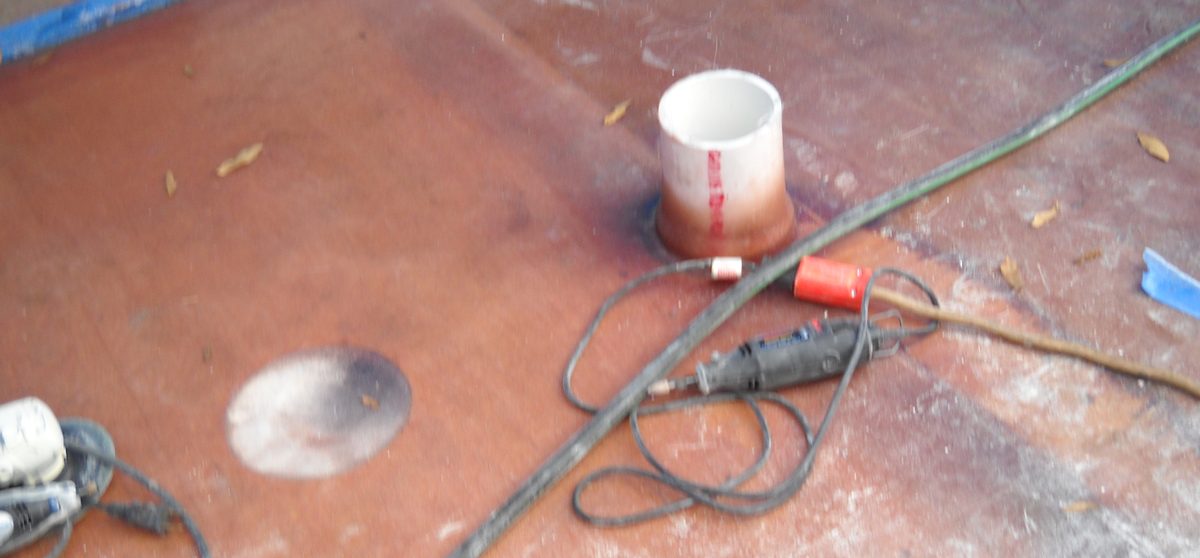
Grinders resting on a deck that has been ground back for new glass

Bottom Peel & Dry-Out

Gelcoat removed and the laminate dried before rebuilding.

A full peel is only needed when blistering is widespread or deep and moisture readings are high across the bottom. With the boat hauled, the gelcoat is ground off the whole bottom and the laminate is washed and left to dry, with readings taken along the way. Rebuilding starts only once the laminate is dry.

Get a Free Quote
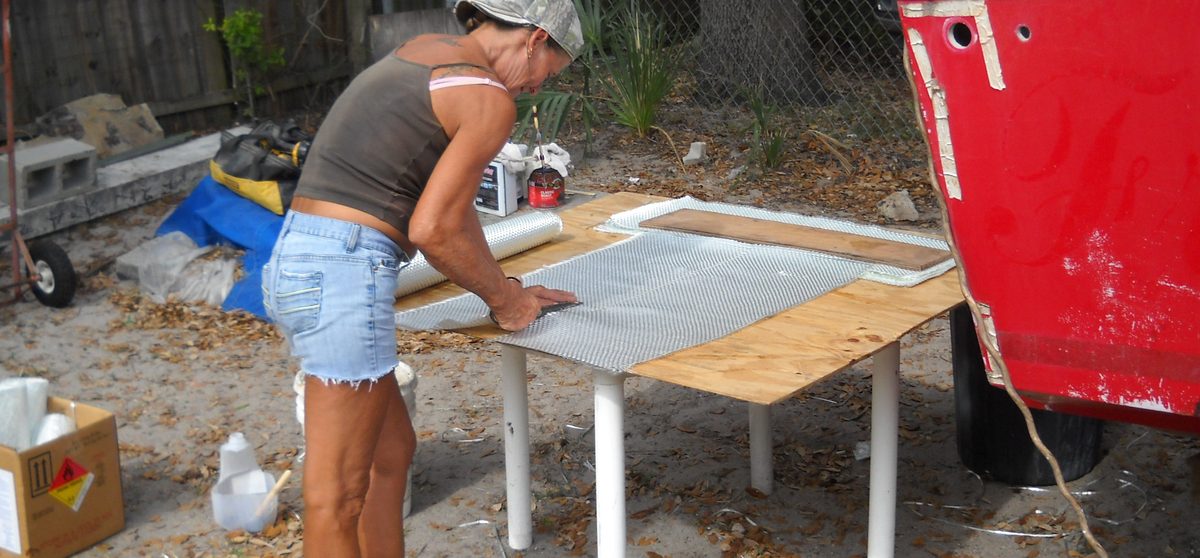
Crew member wetting out fiberglass cloth with resin on the bench

Epoxy Barrier Coat

Multiple coats of epoxy barrier to stop water getting back in.

Blistering happens when a bottom sits in the water with no barrier coat to keep moisture out of the laminate. Once the repairs are done, we apply several coats of epoxy below the waterline to slow water getting back in. It’s the layer the hull was missing, and it goes on whichever resin the repair used.

Get a Free Quote
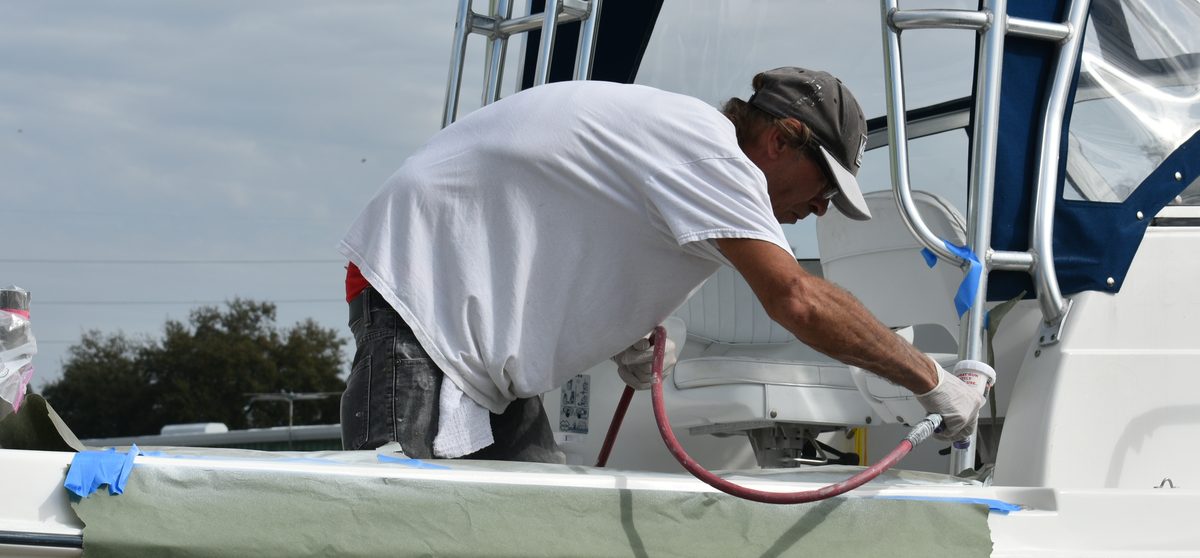
Technician spraying color-matched gelcoat on a masked hull side

Fairing & Bottom Finish

Faired smooth and prepped for bottom paint.

Ground-out and filled blisters leave a bottom uneven, and bottom paint shows every high and low spot. We fair the repaired areas into the surrounding hull until the bottom is smooth and true again, so once it’s sealed it’s ready for bottom paint and looks even rather than patched.

Get a Free Quote
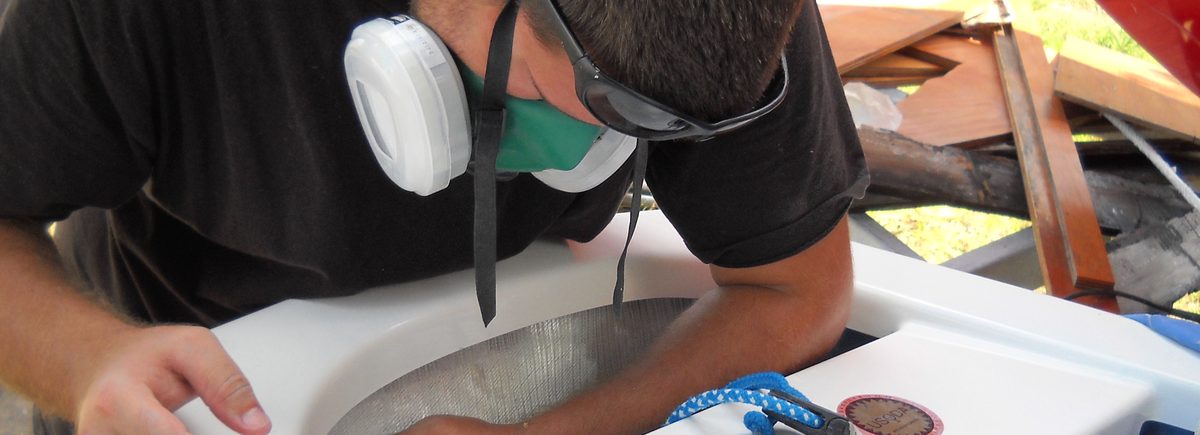
Captain Levi’s technician in a respirator laminating a fiberglass box
Our Blister Repair Process

Built Right. Step by Step.

  1. Test & Survey

    Moisture readings and sample blisters show how deep and widespread the damage is.

  2. Open & Dry Out

    Blisters are ground open, washed and the laminate left to dry fully.

  3. Repair the Laminate

    Damaged glass is replaced and voids filled with epoxy and fiberglass.

  4. Barrier Coat & Finish

    Faired and sealed with an epoxy barrier coat, ready for bottom paint.

Blisters Shouldn’t Be Ignored

Blisters Are Water Getting In.

A handful of blisters can become hundreds. Left alone, osmosis keeps drawing water into the laminate and the repair grows with it.

  • Water AbsorptionWater in the laminate adds weight and keeps feeding blisters.
  • Laminate WeakeningDeep blisters break down the bond between glass layers.
  • DelaminationBlisters can grow into separated layers of fiberglass.
  • Bigger Repair BillsEarly repair and a barrier coat cost far less than a full peel.
Hydrolysis & Resin Choice

Why Blisters Form, and
What We Repair Them With.

Blistering on a hull bottom is hydrolysis: the laminate sits in constant contact with water with no epoxy barrier coat to keep it out. Water works through the gelcoat, reacts with the resin, and the pressure lifts the skin into blisters. Left unrepaired they grow in number and in size, and the bottom of the hull gets weaker.

Which resin a bottom is built from, and which one it is repaired with, decides how well it resists the next round. Three resins matter below the waterline.

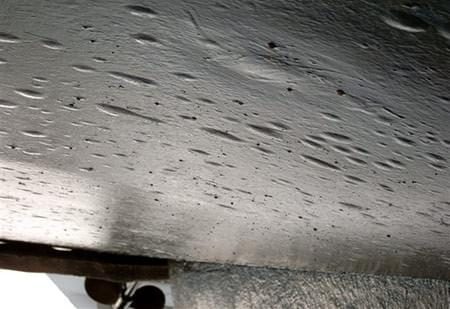
Underside of a fiberglass hull bottom covered in small raised osmotic blisters
A blistered bottom at haul-out. Every bump is a pocket of fluid under the gelcoat.
  1. Most hulls

    General-purpose polyester

    What most fiberglass hulls are built from. It is the economical choice for production boatbuilding, and the one most prone to blistering when the bottom is left without a barrier coat.

  2. Below the waterline

    Vinyl ester

    Far more water-resistant, at roughly twice the price of polyester. A few builders lay up the whole hull in it; others use it only as a skin coat, the first layer of laminate behind the gelcoat. Fiberglass swimming pools follow the same pattern. It is what we use for blister repairs below the waterline.

  3. When the hull can’t dry out

    Epoxy

    About twice the price of vinyl ester again. We use it when a boat cannot stay out of the water long enough for the repair area to dry out fully, which a vinyl ester repair needs.

Whichever resin the repair uses, the bottom gets an epoxy barrier coat afterwards.That is the layer the hull was missing in the first place, and it is what keeps the water out next time.

From Blistered to a Sealed, Smooth Bottom

Real repairs. Real results. A few blister and bottom repairs we’ve completed across Tampa Bay.

View More Repairs
Before: pitted, blistered bottom After: smooth, sealed bottom

Blister Repair

Blisters opened, filled and barrier coated.

Before: cracked, damaged laminate After: rebuilt, faired hull

Laminate Repair

Damaged glass replaced and faired.

Before: cracked gelcoat surface After: smooth, refinished surface

Bottom Refinish

Faired smooth and sealed.

What Does Blister & Osmosis Repair Involve?

Blister repair starts with a moisture survey and opening sample blisters to see how deep they go. Blisters are ground open and washed, and the laminate is left to dry — for widespread osmosis, the gelcoat is peeled from the whole bottom. Damaged glass is replaced, the bottom is faired, and multiple coats of epoxy barrier coat seal it against future water.

  • Moisture survey and blister sampling
  • Grinding, washing and drying of blisters
  • Bottom peel for widespread osmosis
  • Laminate repair with epoxy and fiberglass
  • Epoxy barrier coat application
  • Fairing and bottom paint preparation

Cosmetic Blisters or Osmosis Damage?

Gelcoat Blisters

  • Small, scattered blisters
  • Only in the gelcoat layer
  • Laminate is dry and solid
  • Often on older or poorly cured gelcoat
  • Opened, filled and barrier coated

Laminate Osmosis

  • Large or widespread blisters
  • Blisters extend into the glass
  • High moisture readings across the bottom
  • Acidic, vinegar-smelling fluid
  • Needs peel, dry-out and re-lamination

Seeing blisters at haul-out? Have them sampled before you paint over them.Painting over blisters hides them; it doesn’t stop them.

Why Boaters Choose Captain Levi’s

Experience You Can Count On.

  • 50+ Years ExperienceProven. Reliable. Local.
  • Family Owned & OperatedReal People. Real Care.
  • Marine-Grade MaterialsBuilt for Florida conditions.
  • Mobile & Shop ServiceAt your dock or at our yard.
Serving the Tampa Bay Area

Hull Blister Repair Across Tampa Bay

Based in Largo, Florida, we proudly serve boaters throughout Pinellas County, Tampa Bay and surrounding areas. Our fiberglass repair services are available at our shop or through our fully mobile service.

  • Largo
  • Seminole
  • Clearwater
  • Dunedin
  • St. Petersburg
  • Indian Rocks Beach
  • Tampa
  • And surrounding areas
Frequently Asked Questions

Got Questions?
We’ve Got Answers.

What causes blisters on a fiberglass hull?

Water slowly passes through the gelcoat and reacts with chemicals in the laminate, creating pressure pockets. Warm Florida water speeds the process up.

Are hull blisters dangerous?

Shallow gelcoat blisters are mostly cosmetic. Blisters in the laminate weaken the hull over time and should be repaired.

Do I need a full bottom peel?

Only for widespread or deep blistering. Many boats just need individual blisters opened, repaired and a barrier coat applied.

What is a barrier coat?

Several coats of epoxy applied below the waterline to slow water getting into the laminate. It’s the key to stopping blisters coming back.

Can blisters be repaired at my dock?

No — the boat has to be hauled and the laminate dried. We can haul and store your boat at our Largo yard.

How long does blister repair take?

Most of the time is drying. Small repairs take days; a full peel and dry-out can take weeks. We give you a timeline after the survey.

Blisters on Your Hull Bottom?

Let Captain Levi’s survey the bottom and recommend the right repair.

CONTACT US

We’re Here to Help

Have hull blisters you want looked at, need a quote, or ready to schedule? Fill out the form or give us a call — we’ll get back to you as soon as possible. Your boat deserves the best, and we’re here to make it happen.

  • 50+ Years ExperienceTrusted. Proven. Local.
  • Mobile ServiceWe come to you.
  • Family OwnedReal people. Real care.
  • Tampa BayLargo, FL & surrounding areas.

Request a Free Quote

Tell us about your boat and the damage. We’ll get back to you quickly.

    We use your details only to respond to your request. See our Privacy Policy.